
TL;DR: Broadcast newsrooms now produce for the bulletin, the website, social and audio at the same time, but their planning is split across an NRCS, a CMS, a MAM and more. The fix is a planning layer that sits across the tools you already run, so every team works from one shared plan. That is exactly what Kordiam is. It is broadcast newsroom planning software that connects your existing stack rather than replacing it.
What has actually changed in the broadcast newsroom?
The story, not the broadcast slot, is now the unit of work. The same reporting feeds the evening bulletin, a web article published hours earlier, a social cut-down and, increasingly, an audio version on top. The Reuters Institute's 2026 Journalism and Technology Trends report found that nearly four in five news leaders plan to put more into video this year, and around seven in ten into audio. Linear and digital teams now cover the same events at once, and audiences expect the digital version first.
If every tool works, why does coordination still break down?
Because the plan is scattered across all of them. An NRCS runs the bulletin. A CMS runs the website. A MAM holds the footage. Social and audio live somewhere else again. When planning sits in four systems at once, no one holds a single view of what the newsroom is working on. In the same Reuters Institute survey, nearly half of news leaders named internal silos and a lack of alignment between teams as a barrier to doing new things. A deadline shifts in one place and never reaches the others. Two teams chase the same story without knowing it.
Should you replace the whole stack with one platform?
For most broadcast operations, no. Your NRCS, your playout and your MAM are deep, certified, costly systems your team has built years of muscle memory around. Tearing them out to fix a planning problem is a disproportionate risk for the payoff, and it only trades one lock-in for another. Broadcast newsrooms need their plan to span the systems they already trust.
What does a planning layer across your stack do?
It keeps your production, asset and distribution tools in place and adds one layer above them where the story is defined. Angle, deadline, who is on it and which platforms it is headed to all live in one place that connects outward to the systems doing the work. That is the role Kordiam is built for. It integrates with the tools a newsroom already runs, through APIs and an event-based message queue, rather than asking you to abandon them. This is already working at our customer Yle, Finland's national broadcaster, which rolled Kordiam out to 2,000 journalists in two weeks. A newsroom also doesn't have to change everything at once. It can start with a couple of integrations and add more over time.
What does that give a broadcast team day to day?
Linear and digital teams work from one plan instead of several parallel ones. An editor sees, in a single view, everything in motion across the bulletin, the site, social and audio, and can move a deadline without it quietly falling out of sync elsewhere. Camera and technical crews can check their assignments from a phone. The newsroom keeps its specialist tools and gains the one thing those tools cannot give on their own. A shared picture of the day.
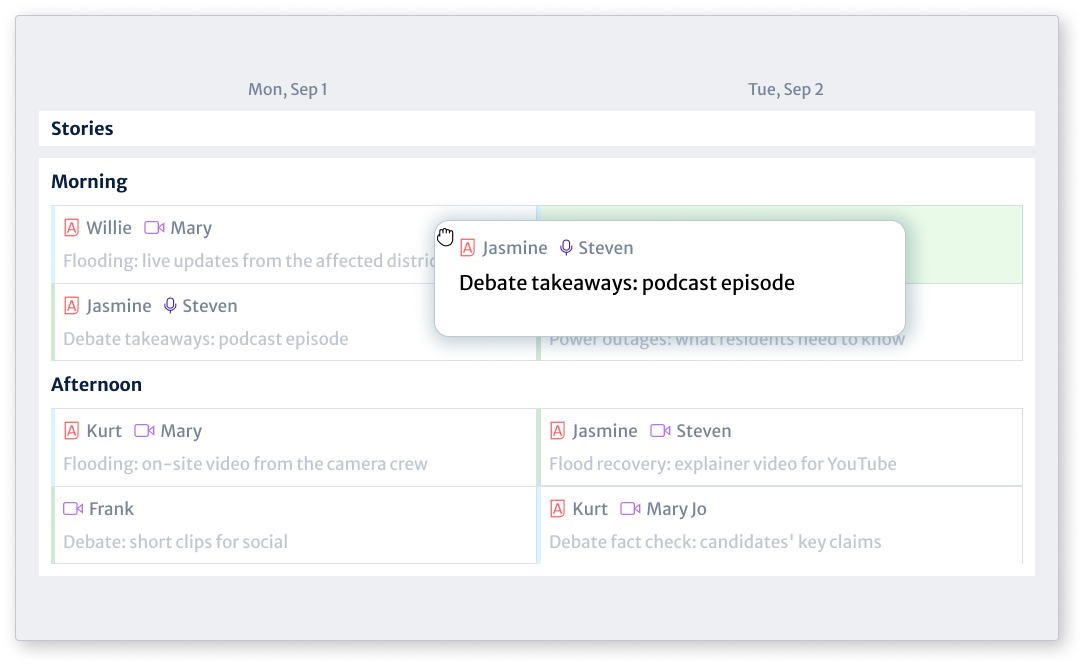
The Reuters Institute's own conclusion points the same way: the news organisations most likely to thrive are the more joined-up ones. In broadcast, that means linear and digital teams following the same plan instead of separate ones. The systems around them will keep multiplying. A shared plan is what keeps every team pulling in the same direction.
If your linear and digital teams still plan in separate places, that is the gap worth closing first. We are glad to talk through what connecting your stack could look like.

What Common Mistakes Do Newsrooms Make in Cross-Ch...
What Common Mistakes Do Newsrooms Make in Cross-Ch...