
TL;DR — Everything You Need to Know About Editorial Planning Across Channels
Editorial planning across channels (also known as cross-media planning) helps newsrooms coordinate topics, formats, deadlines, and responsibilities across print, digital, audio, newsletters, and social platforms.
Instead of planning per channel, teams plan around topics first and adapt formats for each platform. This improves consistency, reduces duplication, and creates visibility across the newsroom. Editorial planning tools like Kordiam support this by centralizing planning and integrating with existing systems.
Key benefits:
Centralized planning across teams, formats, and platforms
Consistent storytelling tailored to each channel
Clear ownership, deadlines, and responsibilities
Continuous improvement based on performance feedback
Together, these practices make editorial planning central to clear, coordinated publishing. Let’s take a closer look at how it works in day-to-day newsroom operations.
Table of Contents
What Is Editorial Planning Across Channels?
Why Coordinating Editorial Content Across Channels Is Difficult
How to Make Cross-Channel Editorial Planning Work
Editorial Planning Tools That Support Cross-Channel Publishing
How Kordiam Supports Cross-Channel Editorial Planning
Technical Support for Cross-media Editorial Planning
How Newsrooms Use Kordiam in Practice
FAQ: Editorial Planning & Multi-Platform Publishing
What Is Editorial Planning Across Channels?
Editorial planning across channels involves aligning content topics, formats, and timelines across various platforms like print, digital, audio, and social. It ensures each piece serves its purpose on the right channel without duplicating effort or diluting the message.
Rather than planning stories in silos, newsrooms treat each topic as a central editorial unit and coordinate how it is prepared, published, and adapted across platforms. The goal is consistent storytelling that plays to the strengths of each channel instead of duplicating the same content everywhere.
In practice, cross-channel editorial planning operates across two key dimensions:
The story perspective: How a specific story is prepared, by whom, in which format, and when and where it will be published
The publication perspective: Which stories appear in a given publication or channel at a specific time, such as today’s website output or the next print edition
As media convergence accelerates, this form of planning has become essential for delivering relevant, timely, and audience-centered content across all touchpoints.
Why Coordinating Editorial Content Across Channels Is Difficult
Editorial and communications teams face growing pressure to do more with less:
Shrinking budgets and limited staff mean fewer people are responsible for more platforms and formats. As documented in the Reuters Digital News Report 2025, outlets like the Associated Press and Vox Media have made substantial cuts, leaving smaller editorial teams to meet growing content and distribution demands across formats and channels
A single story often has multiple deadlines, for example an early web publish, a newsletter cutoff, social distribution windows, and follow-up updates on the same day
Coordination spans multiple teams, departments, or locations, increasing the risk of misalignment
Planning still happens in disconnected spreadsheets, inboxes, or legacy systems, making it hard to keep a reliable overview
This complexity creates common breakdowns:
Duplication of work or inconsistent messaging
Missed deadlines and last-minute content reshuffling
Poor visibility across desks and contributors
Fragmented understanding of what’s being produced and why
A well-structured editorial planning process, supported by the right tools, solves these challenges.
How to Make Cross-Channel Editorial Planning Work
1. Define Goals and Target Audiences
Ask yourself these questions to help you get started:
What does this story aim to achieve?
Who are you trying to reach?
What content do they need?
Use structured interviews, review the performance of past stories, audience analysis, and frameworks like the User Needs model to prioritize topics and formats.
Example: The Conversation's “Quarter Life” series focused on career, finances, and mental health for young professionals. Tailoring content to this group raised completion rates by 52% and boosted syndication.
2. Tailor by Format and Platform
Audiences don’t just vary by platform they expect entirely different formats depending on where they encounter content. As the Reuters Digital News Report 2025 shows, each channel comes with distinct content expectations:
Websites: Readers still prefer text for in-depth or evergreen articles, especially in markets like the UK and Germany.
Newsletters: Concise bullet-point summaries are key because they respect readers’ time and make information easy to absorb. Most newsletter audiences skim rather than read in-depth, especially during commutes or work breaks. Bullet lists help distill complex stories into digestible points, increasing retention and engagement. The Independent's “Bulletin” uses AI-assisted bullet lists to deliver fast, skimmable updates for busy readers.
Social media: Platforms like TikTok and Instagram reward short-form video, visual-first storytelling, and creator-led engagement.
Audio/Video: Podcasts and news videos are on the rise, often featuring commentary, interviews, or behind-the-scenes insight to deepen engagement.
Example: The Washington Post adapted its tone and format for TikTok, creating short, humorous videos that feel native to the platform. You can read more on how to tailor content to multi-platform needs here.
3. Create a Single Source of Truth for Editorial Planning
User needs and target audiences must be embedded into everyday editorial work. Information about platforms and audiences should be actively communicated within the cross-channel editorial plan. Planning who produces how much content for which audience, user need, and channel ultimately defines when, where, and how content is published. This is essential for coherent, efficient, and effective cross-channel planning.
In practice, this works best with a dedicated editorial planning tool that serves as a single source of truth. Such a system brings together calendars, tasks, and channel information, creating transparency and enabling reliable workflows.
Audiences and user needs should be stored as metadata and linked directly to stories. This allows editorial teams to see at a glance which content is needed in the short, medium, or long term. Should the focus shift toward specific audiences or user needs? Are more explainers required instead of breaking updates? With the right tagging logic, the planning tool provides continuous clarity and enables quick adjustments to content production.
4. Measure and Optimize
Continuous performance review is essential to effective cross-channel planning. Measure success by platform and audience segment using metrics such as completion rates, time on page, or repeat engagement, and adjust stories, storytelling angles, and publishing cadence accordingly.
While editorial planning calendars like Kordiam do not provide native analytics, it functions as the central hub for editorial planning - connecting teams, timelines, and platform strategies in one shared space. To support performance-aware decisions, Kordiam can be integrated with external analytics tools like Upscore, bringing audience data directly into the planning workflow. This allows editorial teams to link post-publication metrics - such as engagement or conversions - back to planned stories and topics, helping them adjust priorities without switching systems.
At Heise, this integration allows editors to view key performance indicators such as article views and conversions within their planning environment, without switching tools or consulting separate dashboards. The goal is not analytics for its own sake, but more audience-focused planning, clearer editorial priorities, and faster feedback loops for editors and writers. Read more about their integration here.
Editorial Planning Tools That Support Cross-Channel Publishing
Spreadsheets: Cost-effective, great for early-stage planning but limited in visibility and collaboration.
Tools: Google Sheets, Excel
Project & Workflow Tools: Flexible and visually driven, with built-in collaboration features, ideal for team coordination, particularly within marketing departments.
CMS Plugins: Lightweight tools with deep integration into the content management system.
Editorial Planning Software: An editorial calendar is a core tool for managing the complexity of multi-platform publishing. It allows teams to organize, plan, and track content effectively.
Tools: Kordiam, AP Playbook, Alfamedia
All-in-One Platforms: Comprehensive solutions covering content management, workflows, publishing, and integrations, ideal for larger newsrooms or communications teams.
Tools: Dirico, Scompler, Newsroom Planner
Looking for a more comprehensive overview? Take a look at our list of the best editorial content planning tools.
How Kordiam Supports Cross-Channel Editorial Planning
Kordiam is an editorial planning calendar designed for cross-platform coordination. It acts as a single source of truth for newsrooms and content teams managing complex publishing schedules across print, web, audio, newsletters, and social media.
By centralizing topics, timelines, formats, and responsibilities, Kordiam streamlines editorial workflows and makes planning transparent and collaborative. Many of our customers implement Kordiam alongside organizational changes to strengthen their cross-channel strategy. While the setup varies across teams, several core practices consistently drive success:
Comprehensive planning
All topics and story ideas are recorded in the central editorial planning tool, Kordiam. Parallel planning is avoided. This is the only way to maintain a clear and reliable overview of what the newsroom is working on.
Early story entry
Stories are added as soon as they become known or as soon as an idea emerges.
Clarity and transparency
Stories are entered in a way that makes them understandable even to someone not directly involved. Anyone should be able to quickly grasp what it is about.
Continuous planning
Editorial planning is not a linear process. Coordinating roles such as desk editors continuously review and adjust plans as circumstances change.
Broad access
Editorial teams and, where appropriate, freelance contributors have broad access to the planning system. Freelancers should at minimum have visibility into the stories assigned to them.
Editorial meetings focused on discussion, not information
Traditionally, editorial meetings are often used to inform participants about planned stories from different desks. With centrally accessible planning, all participants can review the lineup of planned stories in advance. As a result, meetings can either be shortened or, more importantly, used for meaningful discussion about priorities, angles, and presentation.
Technical Support for Cross-media Editorial Planning
Once the necessary organizational foundations are in place, a content calendar such as Kordiam can support cross-channel editorial planning effectively. The following features and capabilities play a central role:
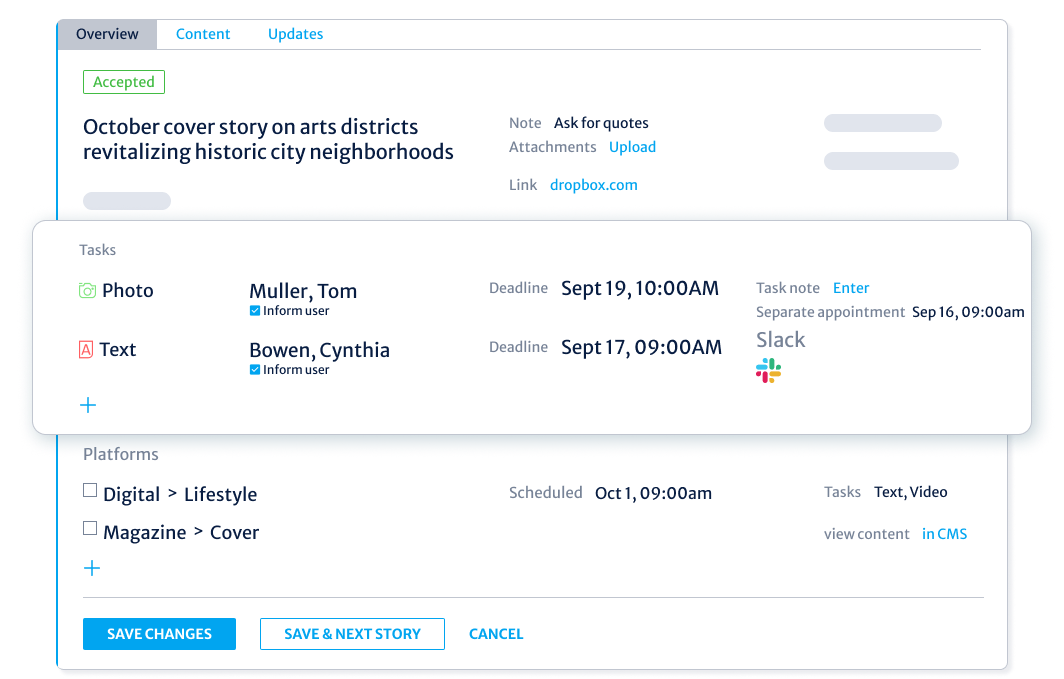
Central storage of all relevant information related to a story within a single view
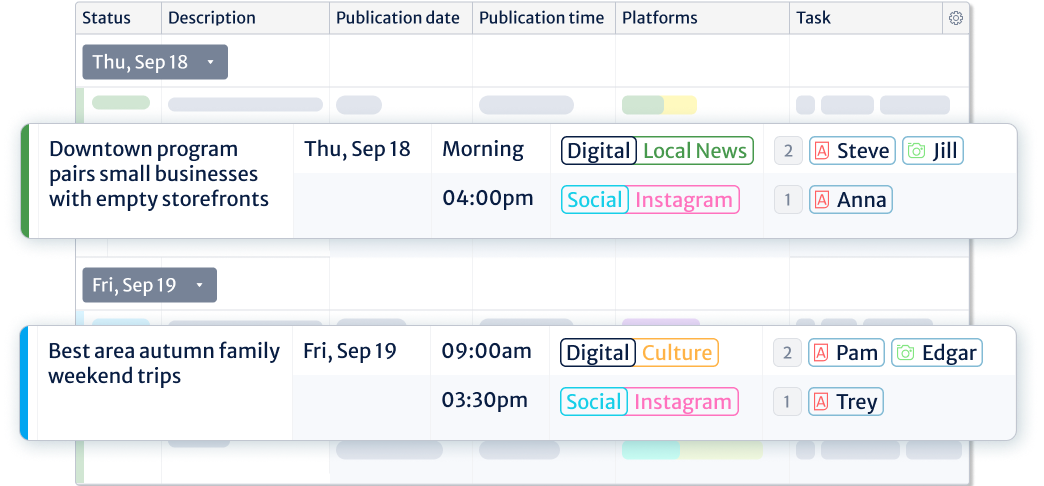
A clear overview showing when and on which publication channels each story will be published
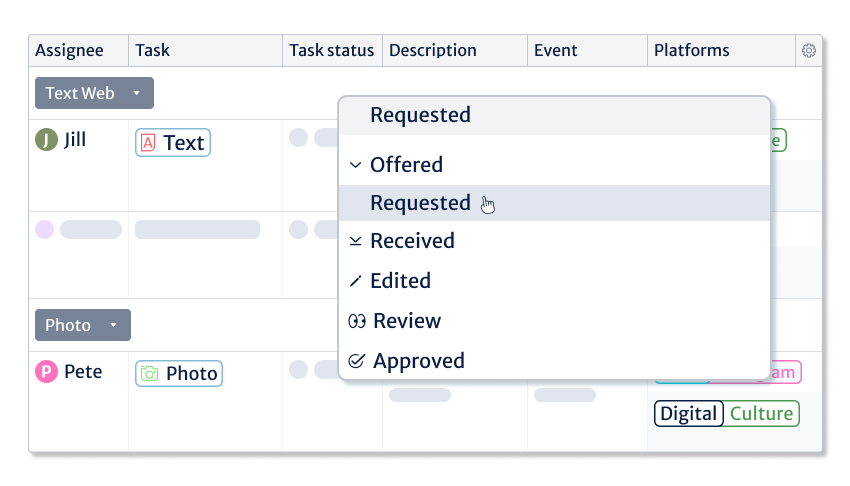
Customizable planning views across one or multiple publication channels, configurable per user
Marking and highlighting of priority stories (“top stories”)
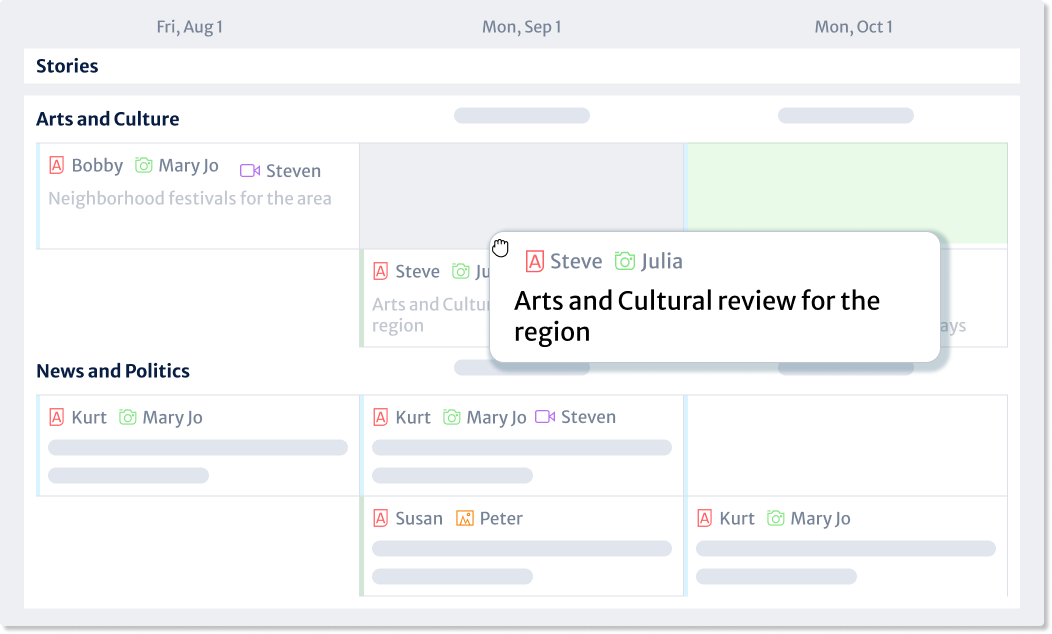
Easy collaboration between editorial teams, freelance contributors, and even across publishers or external service providers
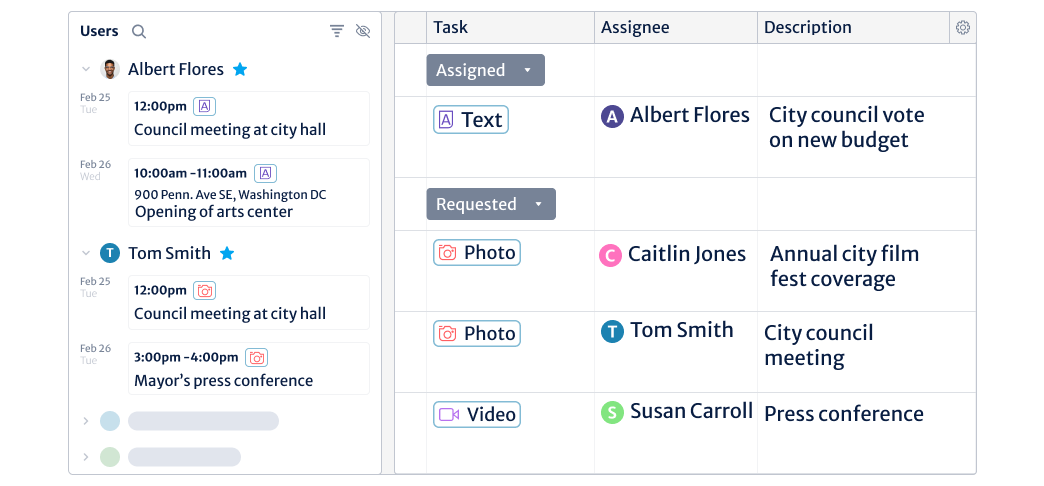
Fast and simple story creation using quick-entry functionality
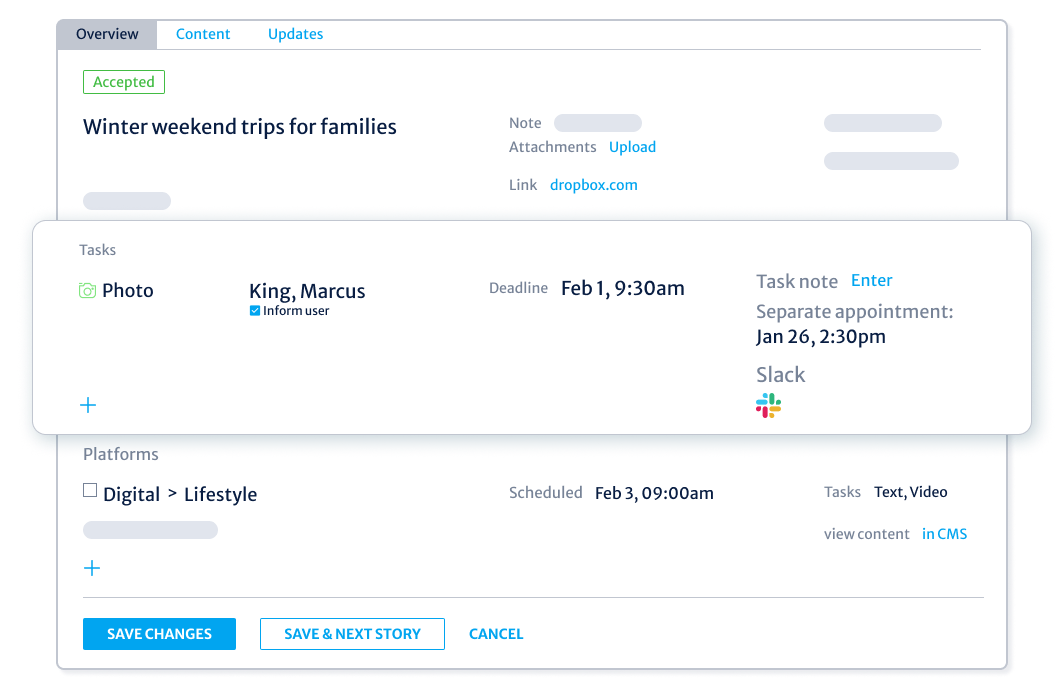
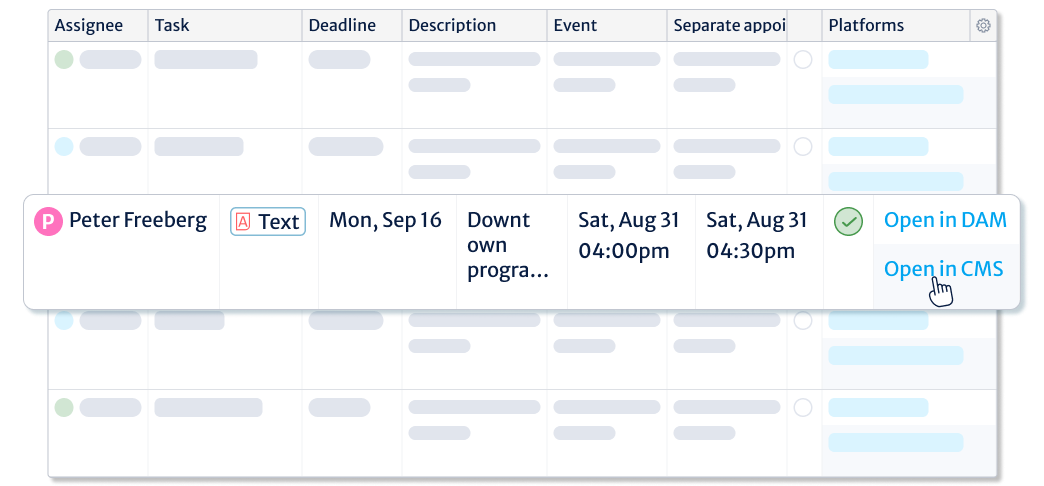
Integration with other newsroom systems, such as CMS and analytics tools
How Newsrooms Use Kordiam in Practice
Ippen.Media
One of Germany’s largest digital publishers, with over 80 regional newsrooms, faced the challenge of making journalistic content centrally available and efficiently reusable across its network. By introducing Kordiam as a shared exchange platform, articles can now be distributed and reused easily and transparently. Licensing, fees, and workflows are clearly structured and automated. Today, 60–80 articles are shared daily, duplication of work and communication overhead have been significantly reduced, and collaboration across the network has become more professional and effective, winning over even initially skeptical editorial teams. Read the case study.
Handelsblatt
Handelsblatt fundamentally modernized its editorial workflows by centralizing planning and production with Kordiam and Livingdocs. The integration eliminated inefficient processes and siloed systems, increased transparency, enabled real-time access to planning data, and significantly improved productivity and team satisfaction. Thanks to the open interface between Kordiam and Livingdocs, content is seamlessly created, planned, and published across print and digital channels. The newsroom views this partnership as a backbone for future innovation and continuous optimization. Read the case study.
Süddeutsche Zeitung
With Kordiam, Süddeutsche Zeitung streamlined and simplified its e-paper production. Editorial planning, task allocation, and progress tracking are now centralized and automated, saving time and resources while enabling faster, higher-quality digital editions. Watch the case study video.
Public service broadcaster
A large public service broadcaster rolled out Kordiam to 2,000 journalists in just two weeks, unifying editorial planning across the entire organization. Previously fragmented planning across multiple locations and tools was replaced by Kordiam as a single source of truth. Editorial teams, camera operators, and other contributors can now plan, track, and coordinate content centrally. Duplicate work and communication issues have been dramatically reduced. Through a clear, phased rollout, targeted CMS integrations, and optimized workflows, the public broadcaster significantly increased efficiency and transparency in the newsroom. Read more about this case study.
FAQ: Editorial Planning & Multi-Platform Publishing
What is editorial planning across channels? Editorial planning across channels brings together stories, formats, deadlines, and responsibilities in a single, centralized overview. It typically follows four steps: defining stories and target audiences, selecting channels and formats, creating a single source of truth, and tracking publication and performance. Editorial planning software such as Kordiam helps make this process transparent and efficient.
What are the benefits of cross-platform editorial planning? It ensures consistent messaging across all channels. Editorial teams can strategically tailor content to the right audience and platform and publish it at the right time, boosting both reach and impact.
Which tools are best suited for cross-channel editorial content planning? The range extends from simple spreadsheets such as Excel or Google Sheets, to project management tools like Trello, Asana, or Airtable, and on to specialized editorial calendars such as Kordiam, AP Playbook, or Naviga. Tools that enable centralized control, offer integrations, and serve as a single source of truth are particularly well suited.
How does centralized editorial content planning support digital transformation in the newsroom? Digital-first newsrooms publish across an increasing number of platforms and formats. Centralized editorial planning helps teams keep an overview in this complexity by standardizing processes and replacing scattered tools with a single shared system.
What advantages does a cross-media editorial plan offer compared to Excel or Google Sheets? Unlike spreadsheets, editorial planning tools offer real-time collaboration, automation, notifications, and integrated calendar features. These tools are also purpose-built for newsroom workflows and provide media-specific functionality. Excel and Google Sheets quickly reach their limits in this context. You can read more here about the advantages of content planning tools over spreadsheets.
How can a newsroom efficiently plan stories and content for multiple platforms at the same time? By combining centralized story planning with targeted adaptation for different platforms. A central tool allows teams to create a story once, link it to audiences and channels, and then plan suitable formats such as articles, videos, or social posts. This gives newsrooms a clear overview at all times while enabling flexible, coordinated publishing across multiple platforms.
How can newsrooms ensure that content is consistent across all channels? By managing stories within a central editorial plan. Clearly defined core messages, linked user needs, and target audiences help ensure that content is aligned across platforms. Checklists and approval workflows further help prevent inconsistencies.
What common mistakes do newsrooms make in cross-channel story planning? Common pitfalls include duplicating content one-to-one across all channels, insufficient audience analysis, poor coordination between desks, parallel planning in different tools, and reviewing performance too late. Successful planning, by contrast, requires clear processes, an audience-focused approach, and consistent workflows.
How can smaller newsrooms with limited resources benefit from cross-media topic planning? Smaller newsrooms in particular benefit from a central editorial calendar, as it reduces duplication of work and helps set clear priorities. With a simple but flexible editorial planning tool, teams can structure topics early, coordinate deadlines, and efficiently distribute content across their most important channels without additional overhead.